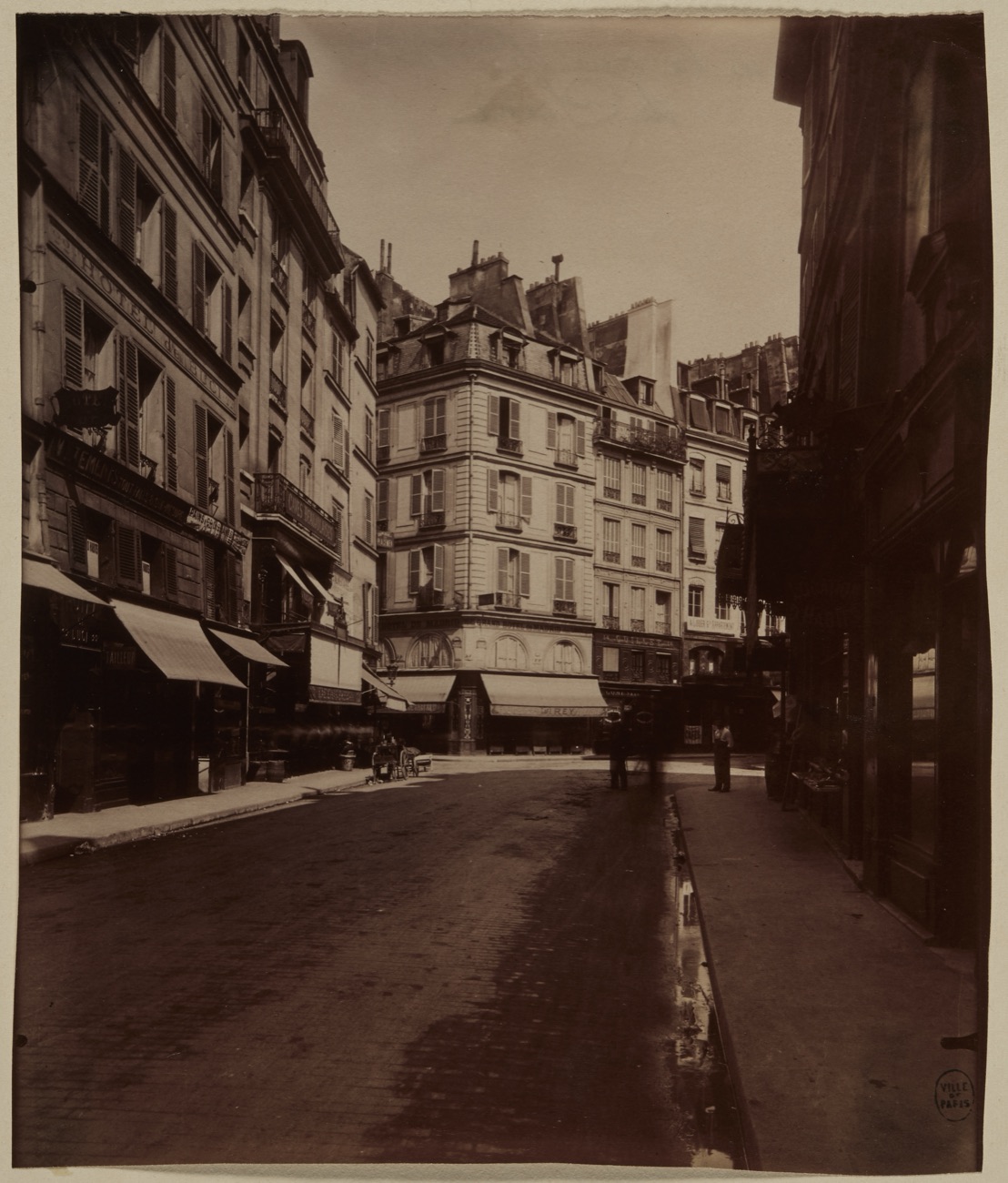
Some Paris addresses are simply places to sleep. A few are places where the city itself began. 13 Rue de Buci is the second kind.
I · The Edge of the WorldWhere Paris ended
Eight hundred years ago, this was the edge of the world — or at least the edge of Paris. Around the year 1200, King Philippe Auguste ringed his capital with a stone wall, and on the Left Bank it opened through a fortified gate: the Porte de Buci. Step through it, and you left the city for open fields and the great abbey of Saint-Germain-des-Prés.
The street that led to that gate took the name of a powerful man of the 14th century — Simon de Buci, First President of the Parlement de Paris, who bought the gate in 1350. The name has held for nearly seven hundred years.
II · A Gate, A BetrayalThe night the city changed hands
That gate saw history turn. On the night of 28–29 May 1418, during the civil war between Armagnacs and Burgundians, a young man named Perrinet Leclerc — the son of a local iron merchant — stole his father's keys and quietly opened the Porte de Buci. Through it, the Burgundian troops, allied with the English, poured into Paris and seized the city. One teenager, one gate, and the capital changed hands.
III · A Living StreetCafés, revolutions & a market
The wall came down, but the street kept its pulse. A few doors away, in 1686, the Café Procope opened — the oldest café in Paris — where Voltaire, Diderot and Rousseau argued the Enlightenment into being, and where Danton and Marat later plotted a revolution.
The Buci market has fed the neighbourhood for centuries. On 31 May 1942, under the Occupation, it became the stage for one of the Resistance's boldest public actions. Kings, philosophers, revolutionaries, résistants — they all passed this way.
IV · The House ItselfYounger than the street
To be honest about it: the house at number 13 is younger than the street. It is a fine Parisian building of around 1880 — six floors of pale, late-19th-century stone. Its walls did not witness the betrayal of 1418. But they stand exactly where, for eight centuries, one entered and left Paris through the Porte de Buci.
That is the quiet magic of the address: a nineteenth-century home, on one of the oldest thresholds of the city.
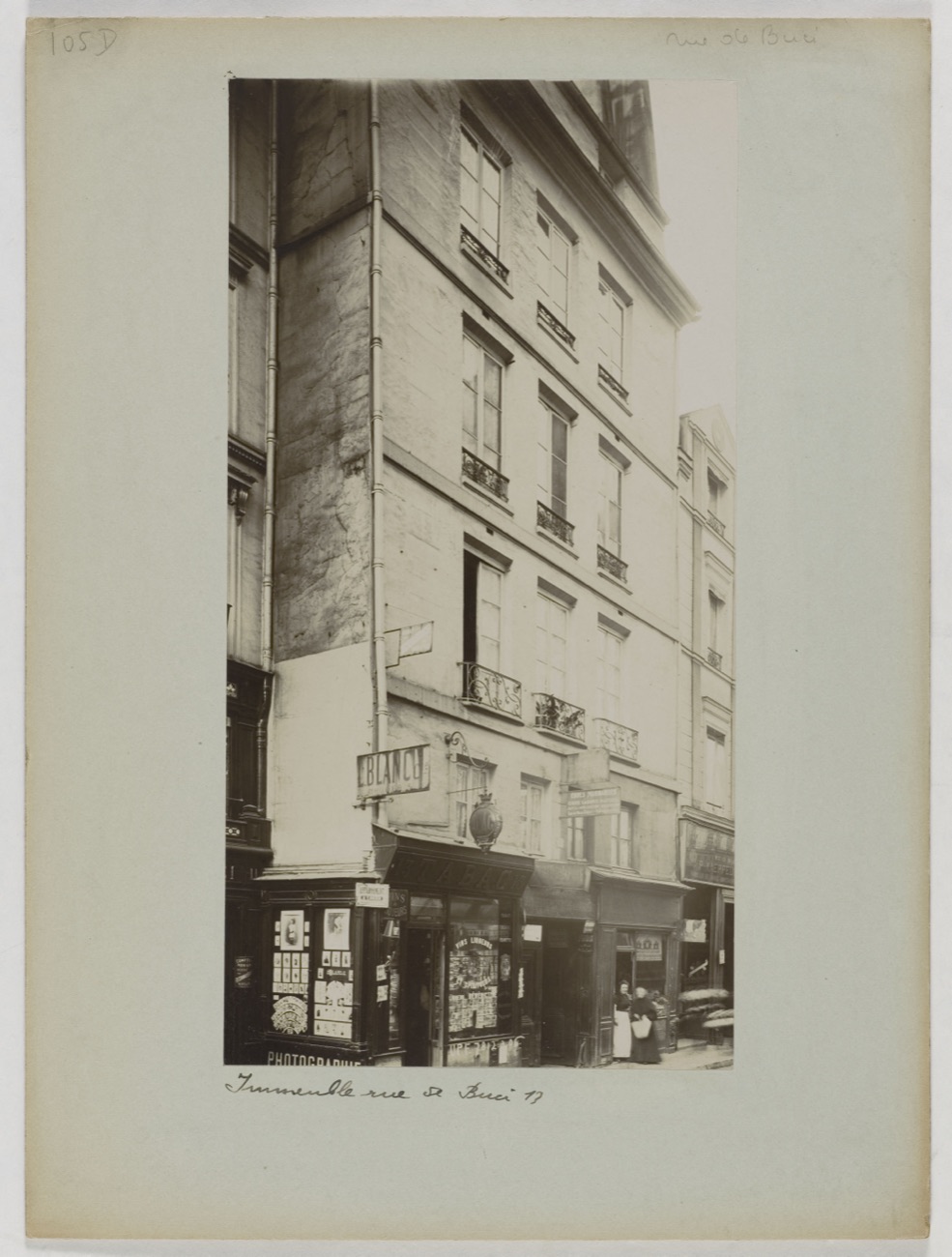
Then & NowThe same façade, a century apart
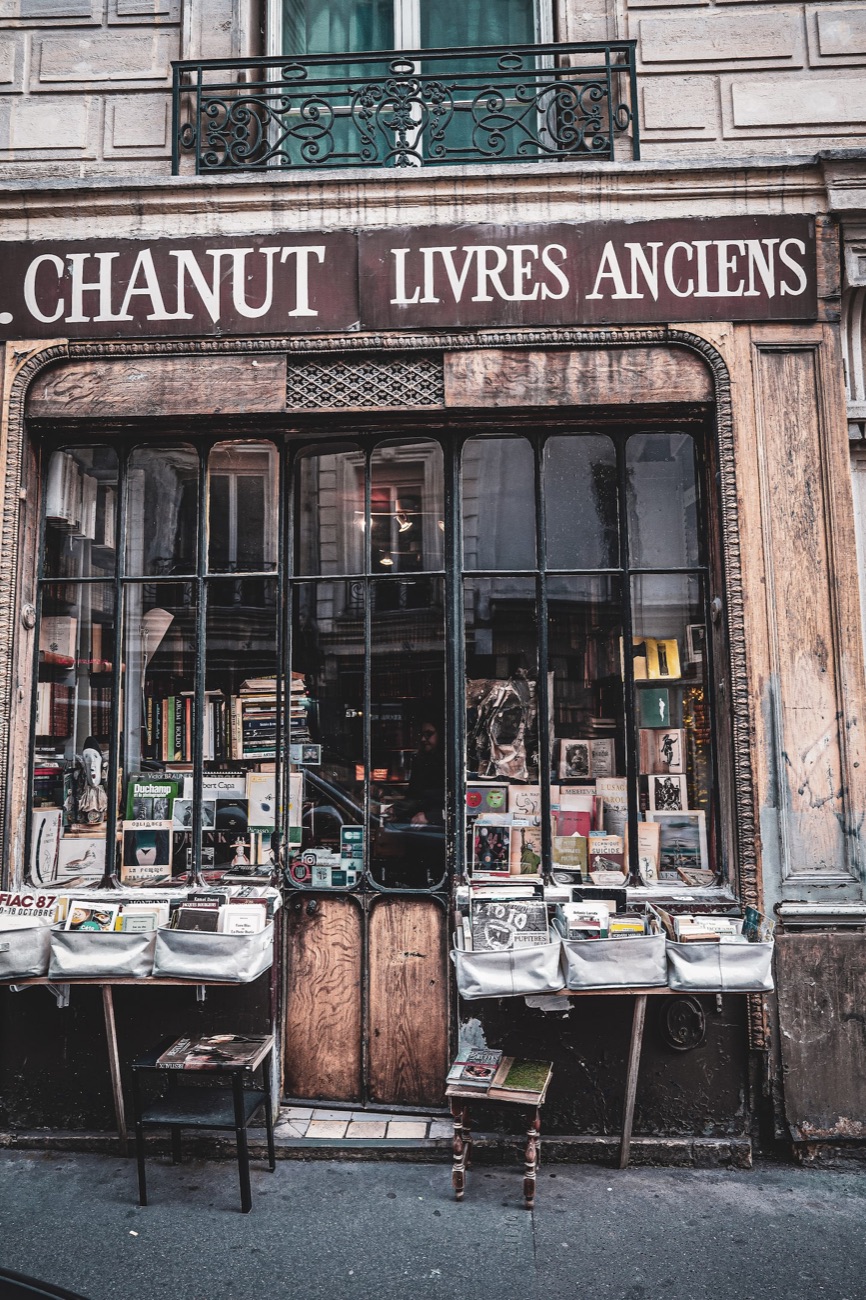
More than a century separates these two frames, and yet the street answers the same call: books, coffee, and the unhurried murmur of Saint-Germain.
Studio Buci — 13 Rue de Buci
Sleep at the heart of Saint-Germain, with the Seine, Notre-Dame and the Louvre a few steps away. Best price, booked direct — no middleman.
Book direct → homestay-france.com